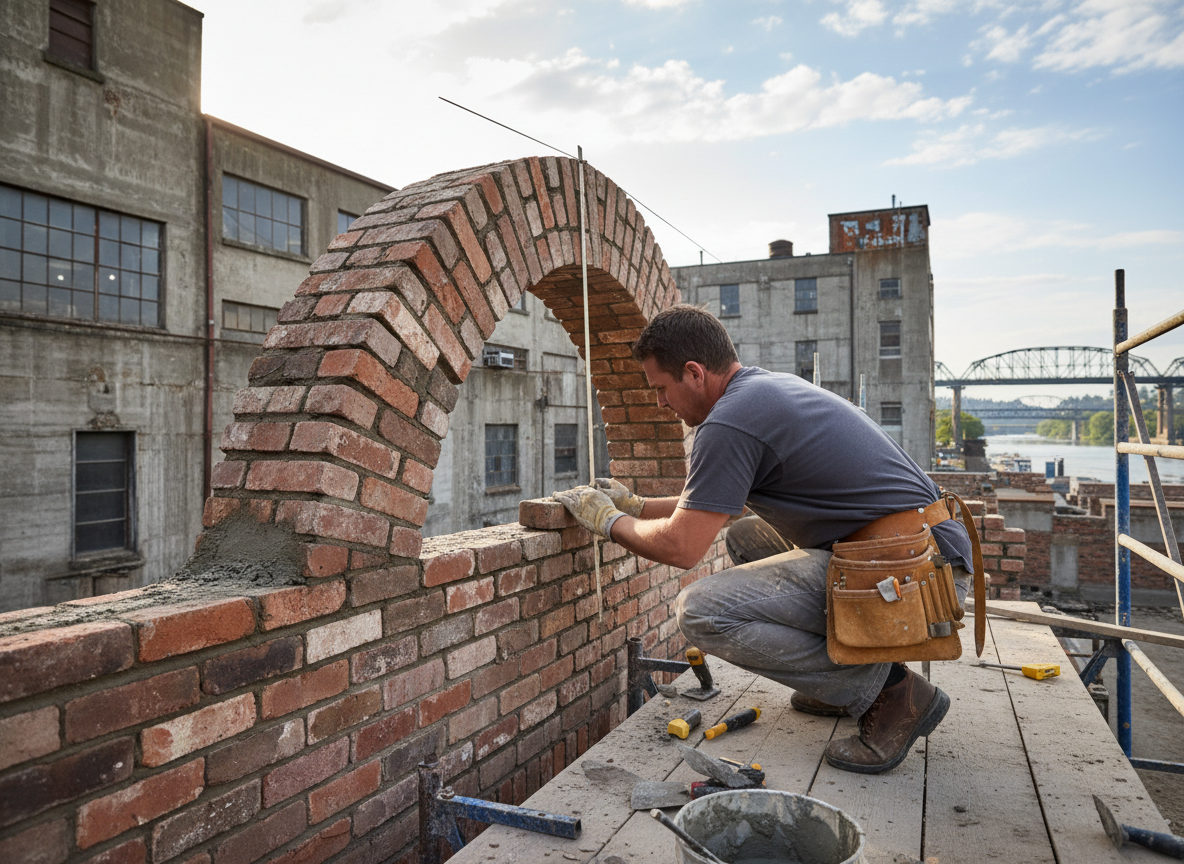
Archway brick construction in Milwaukie requires attention to the mild wet winters that saturate mortar joints and the warm dry summers that cause expansion. Homes in Downtown Milwaukie and Ardenwald often date from the early 1900s with original brick that has settled unevenly over time. Builders must account for soil movement near the Willamette River and ensure weep holes and flashings direct water away from the arch curve. Without proper expansion joints, repeated freeze-thaw cycles in Clackamas County can crack the crown of the arch within a few seasons.
Selecting the right brick and lime-based mortar matters when matching existing masonry in Island Station or Hector Campbell neighborhoods. Modern cement-heavy mixes bond poorly to older soft brick common around Milwaukie Museum properties and can trap moisture. Reinforcement with stainless steel lintels and proper centering during construction prevents sagging under the weight of the arch. Local codes in Clackamas County also require inspection of load paths before the arch is closed in, especially on additions near the riverfront where wind loads increase.
Edge cases arise when tying new archways into existing foundations that have shifted due to seasonal water table changes. In these situations, helical piers or additional footings may be needed before brickwork begins. Warm dry summers allow faster curing but require misting schedules to avoid rapid drying cracks. Crews based at 10824 SE Oak St stay available 24/7 to address sudden weather shifts that affect open mortar beds.
Site Assessment Notes
Before starting any archway, check for hidden utilities and verify that the opening width matches the brick module to avoid cut bricks that weaken the structure. Homes near Milwaukie Riverfront Park often sit on fill material that requires extra compaction testing.
Technician insight
In Milwaukie, the thing that catches most people out with archway brick construction is underestimating how the wet winters keep older foundations moving in Clackamas County clay soils. Homeowners in Ardenwald often skip extra footings and then watch the arch crack along the spring line after the first heavy rains.
Ardenwald Arch Repair
A 1920s bungalow showed diagonal cracks above the front door arch after several wet winters. Inspection revealed the original footings had settled unevenly near a seasonal drainage path. We added helical piers, rebuilt the arch with matching soft brick and lime mortar, and added proper flashings. The arch has remained stable through two summers and winters.
How it works
- 1
Initial Site Visit
Measure the opening, assess existing brick condition, and note drainage patterns around the property in neighborhoods like Ardenwald.
- 2
Material Selection
Choose compatible brick and mortar that match the age and exposure of the home while accounting for Milwaukie's wet winters.
- 3
Formwork and Reinforcement
Install proper centering and stainless steel supports sized for local wind and soil conditions.
- 4
Brick Laying and Curing
Lay bricks with correct joint thickness, install flashings, then maintain moisture control through summer dry periods.
- 5
Final Inspection and Cleanup
Remove forms, verify load transfer, and ensure all weep holes remain clear before leaving the site.
Pricing
Cost depends on arch span, brick type, reinforcement needs, and site access; contact QuarryEdge Builders for an upfront quote.