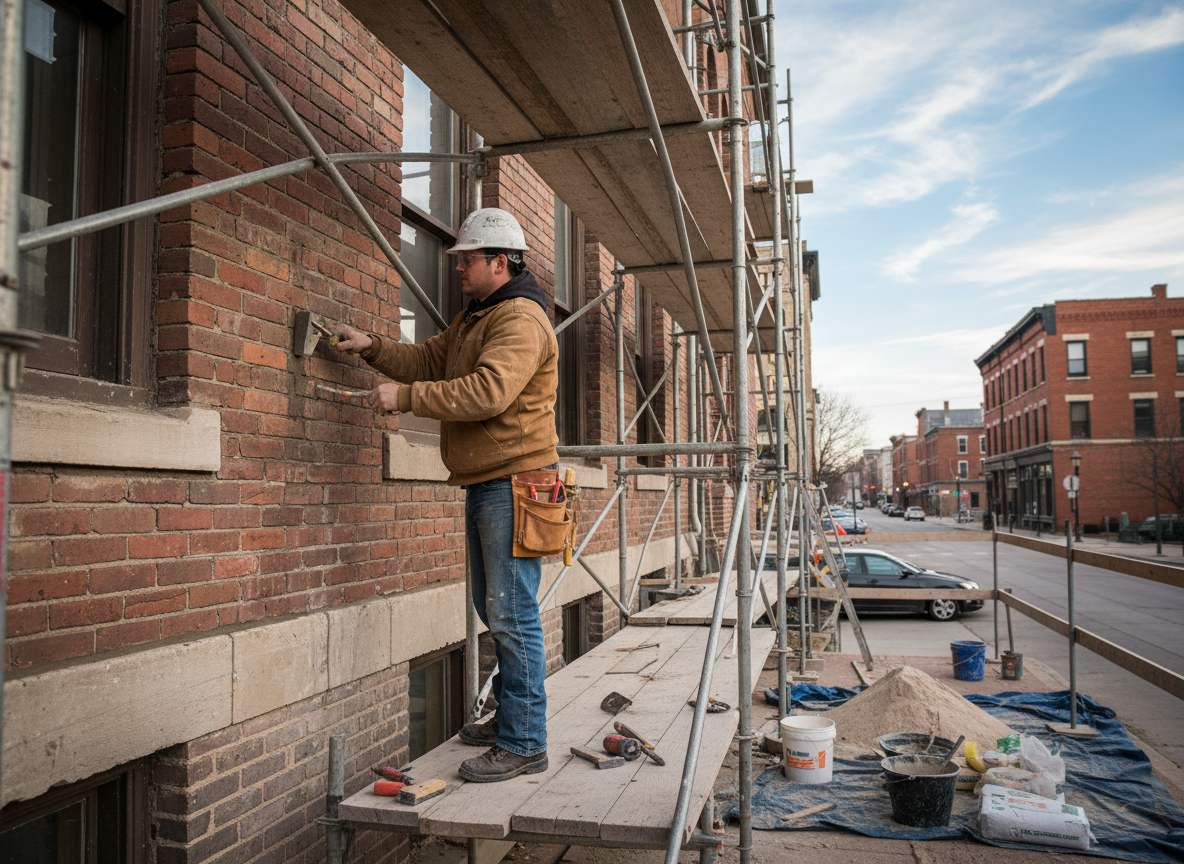
Milwaukie’s housing stock in neighborhoods such as Ardenwald, Hector Campbell, and Island Station includes many homes built before 1960 with original brick foundations, chimneys, and facades. These structures sit close to the Willamette River and face repeated cycles of mild but persistent winter rain that drives moisture deep into mortar joints. Over time the lime-based mortar common in that era softens, allowing water to reach the brick itself and cause spalling once temperatures swing during the drier summer months. Restoration work here starts with careful removal of failed mortar without damaging the surrounding masonry, then repointing with a compatible mix that matches the original permeability so the wall can continue to breathe.
Restoration projects near Milwaukie Riverfront Park or along the river often encounter additional challenges from higher soil moisture and occasional flooding that saturates lower courses of stone or brick. Crews must assess whether the existing masonry can be salvaged or if sections require rebuilding with matching materials sourced locally. In Clackamas County, any work visible from the street on older homes may trigger review under historic guidelines, so crews document the original joint profiles and tooling before beginning. Skipping this step can lead to mismatched appearance or future cracking when the new mortar expands differently than the old brick.
Dry summers in the Portland metro area allow restoration crews to work efficiently once the winter rains stop, but the same heat can cause rapid curing of new mortar if not kept damp during the first few days. Experienced masons schedule pointing work in shaded sections during peak summer heat and use breathable coverings to control moisture loss. Homeowners in Downtown Milwaukie sometimes discover hidden damage only after removing overgrown ivy or after a heavy rain reveals interior leaks, turning a small repointing job into a larger structural repair that must be coordinated with the county building department.
Technician insight
In Milwaukie, the thing that catches most people out with masonry restoration is how the constant winter moisture from the Willamette River keeps older mortar soft in homes built before the 1950s in Island Station and Ardenwald; homeowners often try to patch only the visible spots and miss the hidden joints behind overgrown plantings that later cause interior leaks.
Chimney Base Repair After Winter Seepage
A homeowner in Hector Campbell noticed interior staining near a brick chimney each spring. Inspection showed softened mortar at the base where river-influenced soil stayed damp through the mild winters. Crews removed the failed mortar, repointed with a lime-rich mix matched to the original, and rebuilt two damaged courses of brick. The chimney now sheds water properly and no further staining appeared after the next wet season.
How it works
- 1
Site Assessment
Walk the property in Downtown Milwaukie or Ardenwald to identify failing mortar, spalled brick, and water intrusion points tied to the Willamette River climate.
- 2
Mortar Analysis
Test original mortar composition on-site to match strength and permeability before any removal begins.
- 3
Selective Removal
Hand-remove deteriorated joints without power tools that could crack surrounding brick common in pre-1960 Clackamas County homes.
- 4
Repointing and Curing
Install new mortar in stages, keeping joints damp during summer dry periods to prevent premature cracking.
Pricing
Cost depends on access, extent of damage, and whether sections need rebuilding; most Milwaukie restoration jobs are quoted after an on-site visit.