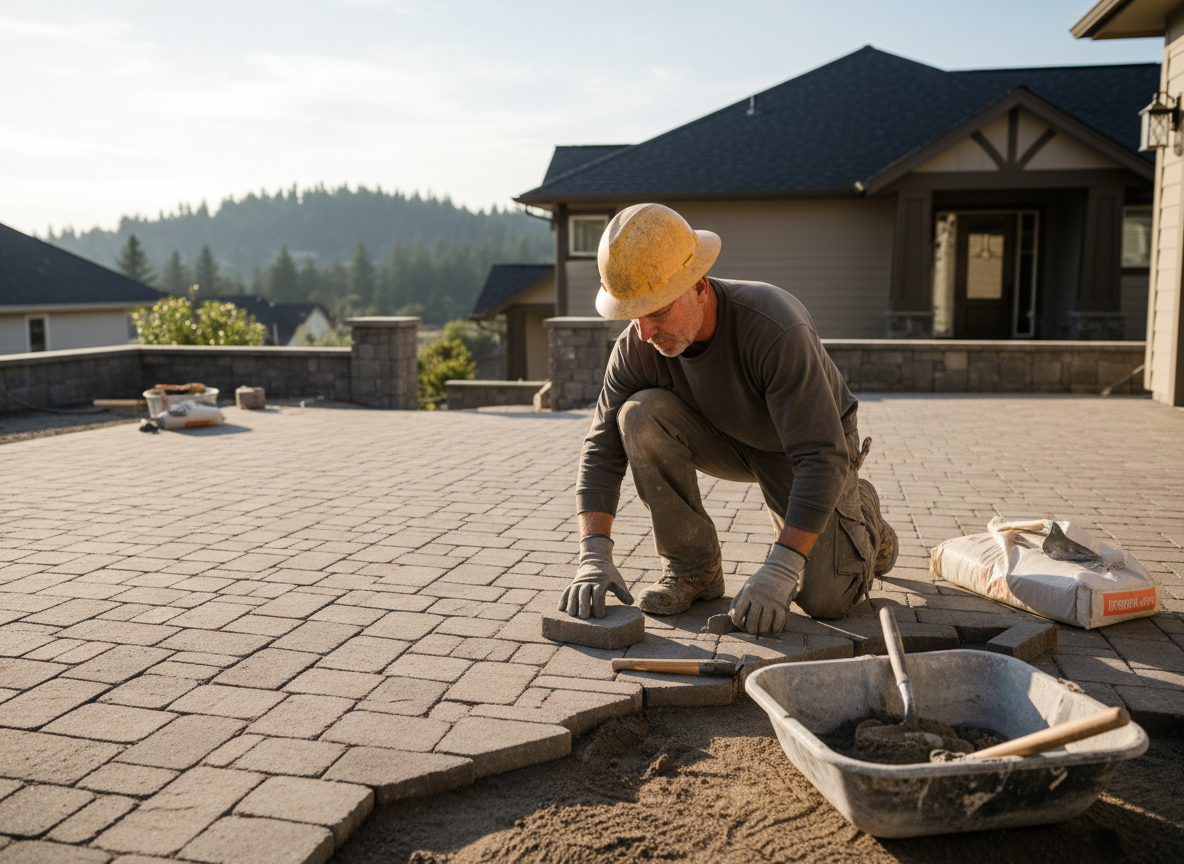
Milwaukie driveways face constant stress from mild wet winters that saturate soil near the Willamette River and warm dry summers that cause expansion cracks. In neighborhoods like Downtown Milwaukie and Hector Campbell, many homes built before 1970 sit on clay-heavy ground that shifts after heavy rain, pushing pavers or brick edges out of alignment. A masonry contractor must excavate beyond the surface layer, add proper base material, and slope the surface to carry water toward the street rather than letting it pool against foundations.
Portland commuters often park on driveways in Ardenwald that were originally poured without reinforcement. When winter moisture seeps under the slab, freeze-thaw cycles are rare here but saturation still lifts sections over time. Replacing sections requires matching the existing aggregate and tooling so the repair does not stand out against the older concrete. We also install permeable paver systems that reduce runoff into Clackamas County storm drains, a growing requirement for properties near Milwaukie Riverfront Park.
Terrain along the river bluff in Island Station creates additional challenges. Driveways with steep approaches need thicker edging and deeper footings to prevent sliding when the ground softens. Homeowners frequently request brick borders or natural stone accents that complement the historic character of the Milwaukie Museum district while still supporting daily vehicle traffic.
Every job starts with checking for underground utilities and verifying that new masonry meets local setbacks from property lines and the street. We compact the base in lifts, install geotextile fabric where soil is soft, and finish with polymeric sand that resists washing out during the frequent winter rains.
Technician insight
In Milwaukie the thing that catches most people out with driveway masonry is how quickly wet winter soil near the Willamette River softens and lets pavers sink on the uphill side of Ardenwald lots. Homeowners often skip the extra base depth thinking the mild climate will not matter, then watch the edges heave after the first heavy rains of November.
Sinking Pavers on a Hector Campbell Driveway
The owner noticed water pooling and bricks tilting after several wet months. We found the original base had washed out due to poor slope toward the street. We removed the settled section, added a deeper compacted base with better drainage, and relaid the pavers to match the existing pattern. The driveway now sheds water properly even during Clackamas County winter storms.
How it works
- 1
Site Assessment
We visit the property in Milwaukie to measure the driveway, note drainage patterns, and check soil conditions around the Willamette River influence zone.
- 2
Base Preparation
Excavation removes old material, followed by adding and compacting crushed rock base suited to Clackamas County clay soils.
- 3
Masonry Installation
Pavers, brick, or stone are laid with proper slope and edge restraints to handle vehicle loads and seasonal moisture.
- 4
Finishing and Cleanup
Joints are filled, surfaces are cleaned, and the site is left ready for use after the recommended cure time.
Pricing
Pricing depends on materials chosen, driveway length, and any drainage corrections required by site conditions; we provide upfront quotes after the visit.