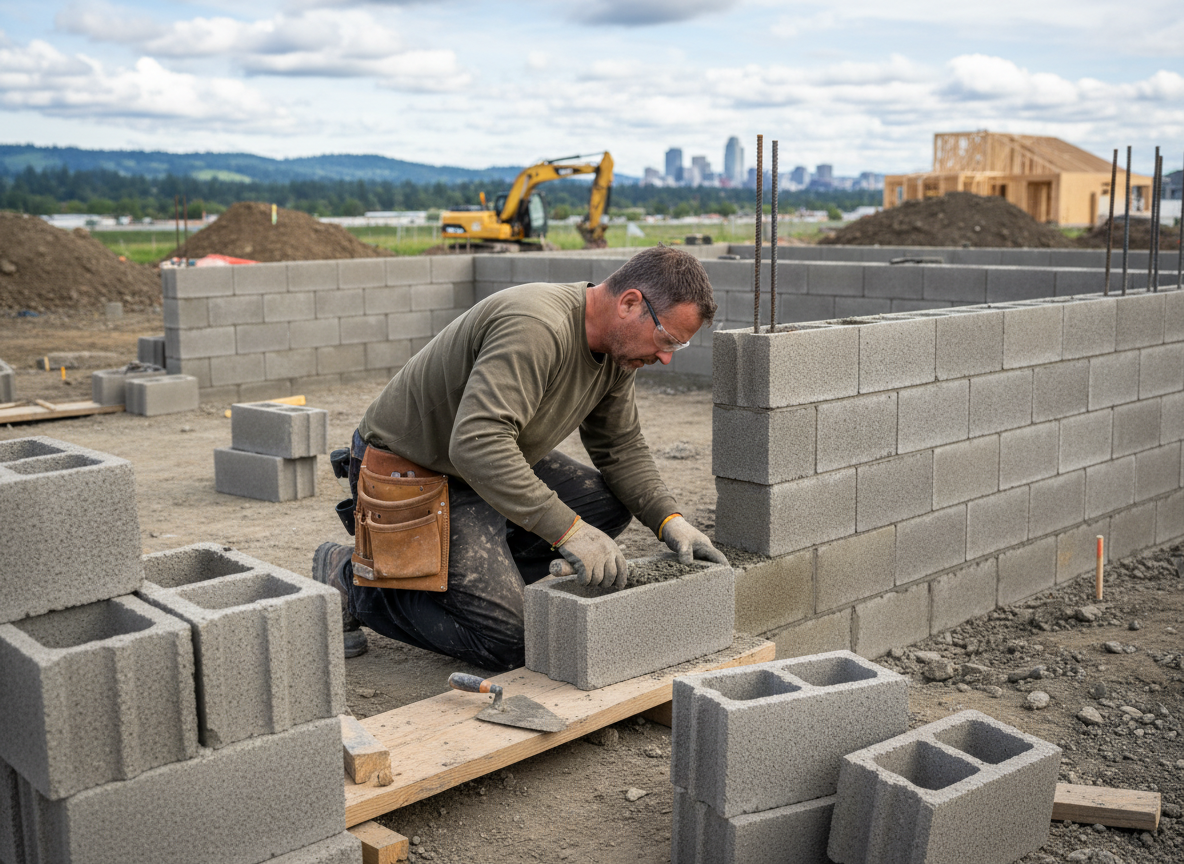
Milwaukie homes in neighborhoods such as Ardenwald and Hector Campbell often sit on clay-heavy soils that swell during the mild wet winters and shrink in the warm dry summers. This cycle stresses older brick and block foundations common in houses built before the 1970s, especially those close to the Willamette River where groundwater levels stay elevated. QuarryEdge Builders works from 10824 SE Oak St to match existing masonry while improving drainage and joint integrity so water does not undermine footings during prolonged winter rains.
Foundation work here frequently involves excavating along one or two sides of a home rather than full perimeter access because many lots back up to slopes or shared fences in Downtown Milwaukie and Island Station. We repoint deteriorated mortar, replace spalled blocks, and install new weep holes when original drainage has failed. Clackamas County requirements for frost protection and soil bearing are checked on every job since river proximity can create soft pockets that standard footings do not anticipate.
Homeowners sometimes discover interior cracks only after a heavy rain event when water enters through hairline separations in the foundation wall. In these cases we combine masonry repair with exterior grading adjustments to direct runoff away from the structure. The goal is always to restore load-bearing capacity without overbuilding, preserving the original character of Milwaukie homes while meeting current performance needs.
Technician insight
In Milwaukie, the thing that catches most people out with foundation masonry is the heavy clay soils around the Willamette River in neighborhoods like Hector Campbell. After a wet winter these soils expand and contract, cracking foundations in homes built before the 1970s. Always check drainage before starting repairs or the same movement returns the next season.
Ardenwald Foundation Stabilization
Cracks appeared in a basement wall after repeated winter rains. We found poor original grading allowing water to pool against the footing near the river. New masonry piers were installed along the affected wall and exterior grade was adjusted. The foundation stopped moving and the homeowner reported no further water entry the following winter.
How it works
- 1
Site Evaluation
Walk the foundation perimeter, note cracks, water stains, and soil conditions around the property in the specific neighborhood.
- 2
Soil and Drainage Review
Check grading, downspout placement, and proximity to the Willamette River or low-lying areas that hold winter moisture.
- 3
Masonry Repair Plan
Select matching brick or block, detail joint repairs, and outline any reinforcement needed for the home's age and construction type.
- 4
Work Execution and Backfill
Complete repairs, install drainage improvements, and restore grade so water moves away from the foundation during the next wet season.
Pricing
Upfront written quotes provided after on-site inspection at 10824 SE Oak St; final cost depends on access, depth of excavation, and extent of existing damage.