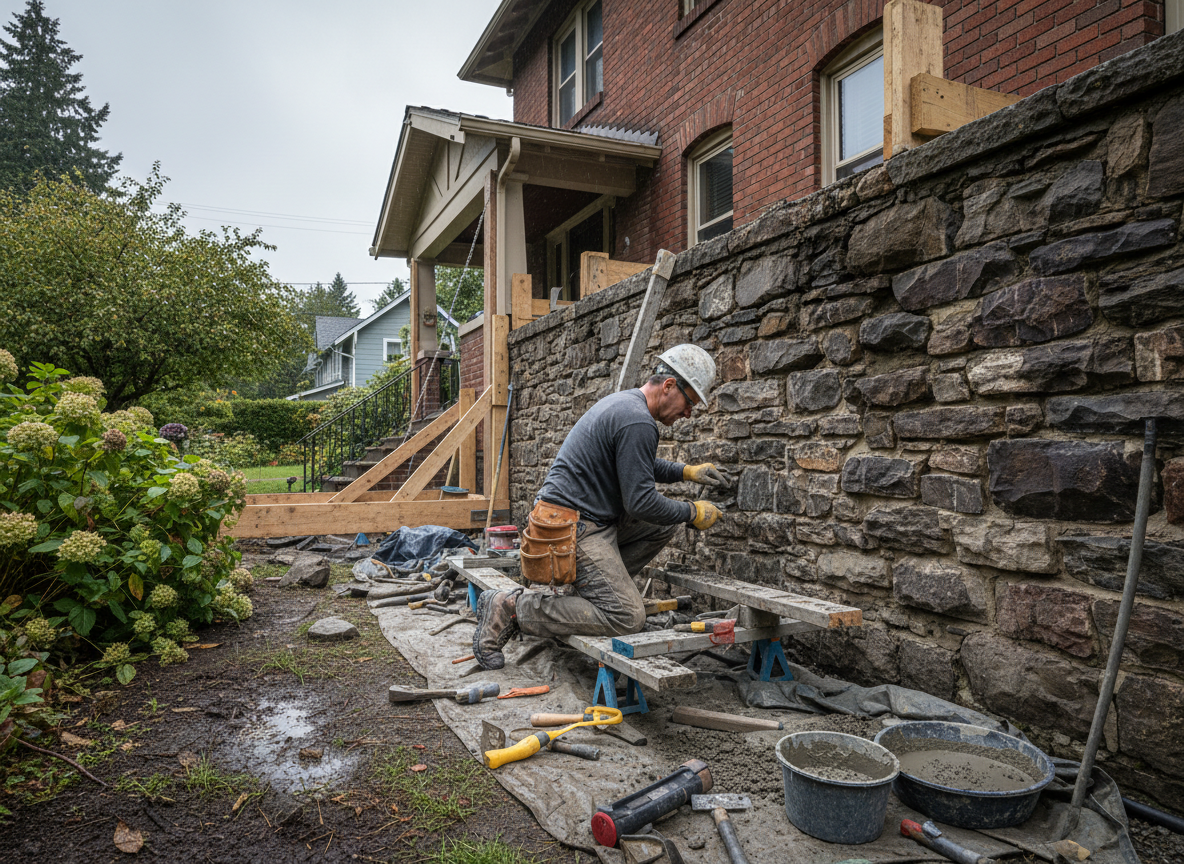
Milwaukie’s older housing stock in areas like Ardenwald and Hector Campbell often features original concrete block or brick foundations set on clay-heavy soils that shift after repeated wet winters. Water from the Willamette River and seasonal rains pools against these walls, pushing through mortar joints and creating horizontal cracks that worsen when summer drying follows. A masonry contractor must excavate carefully to avoid undermining adjacent structures while installing new parging and drainage planes that hold up under the county’s freeze-thaw cycles.
Island Station and Downtown Milwaukie properties sit close to the river, where high water tables push hydrostatic pressure against foundations year-round. Standard surface patching fails here; proper repair involves installing French drains tied into existing stormwater systems and rebuilding deteriorated piers with reinforced block that matches the original coursing. Homeowners frequently discover the issue only after interior drywall cracks appear or doors begin to bind during the first prolonged rain.
Clackamas County building practices require any below-grade masonry work to meet current seismic and drainage standards even on older homes. This means tying new reinforcement into the existing footing without disturbing utilities that run along SE Oak Street corridors. QuarryEdge Builders works from 10824 SE Oak St and responds 24/7 when a homeowner reports sudden water intrusion after a heavy storm.
Seasonal Moisture Patterns
Mild wet winters keep soil saturated from November through March, so repairs scheduled in late summer allow proper curing before the next rain cycle begins. Warm dry summers let crews work efficiently but require extra curing blankets if temperatures spike above 85 degrees.
Technician insight
In Milwaukie, the thing that catches most people out with masonry foundation repair is how the clay soils in Ardenwald and near the river hold water through our mild wet winters, turning small mortar cracks into major settlement before homeowners notice interior signs.
Ardenwald Home Foundation Settlement
A homeowner noticed binding doors and a horizontal crack along the east wall after several wet winters. Excavation revealed saturated clay pushing against unreinforced block laid in the 1950s. Crews rebuilt the section, added a French drain tied into the street system, and restored grade so water now flows toward the Willamette River rather than pooling against the house.
How it works
- 1
Site Assessment
Inspect foundation walls, grade, and drainage around the property in the specific neighborhood to identify active water paths and soil movement.
- 2
Excavation and Preparation
Hand-dig or machine-excavate to the footing while protecting existing landscaping and utilities common in Milwaukie lots.
- 3
Masonry Repair
Rebuild damaged sections, install new weep holes, and apply waterproofing membrane suited to local clay soils.
- 4
Backfill and Drainage
Replace soil with proper compaction and connect new drains to existing systems that empty toward the Willamette River corridor.
Pricing
Cost depends on depth of excavation, length of wall affected, and access constraints typical in established Milwaukie neighborhoods; upfront quotes provided after on-site visit.