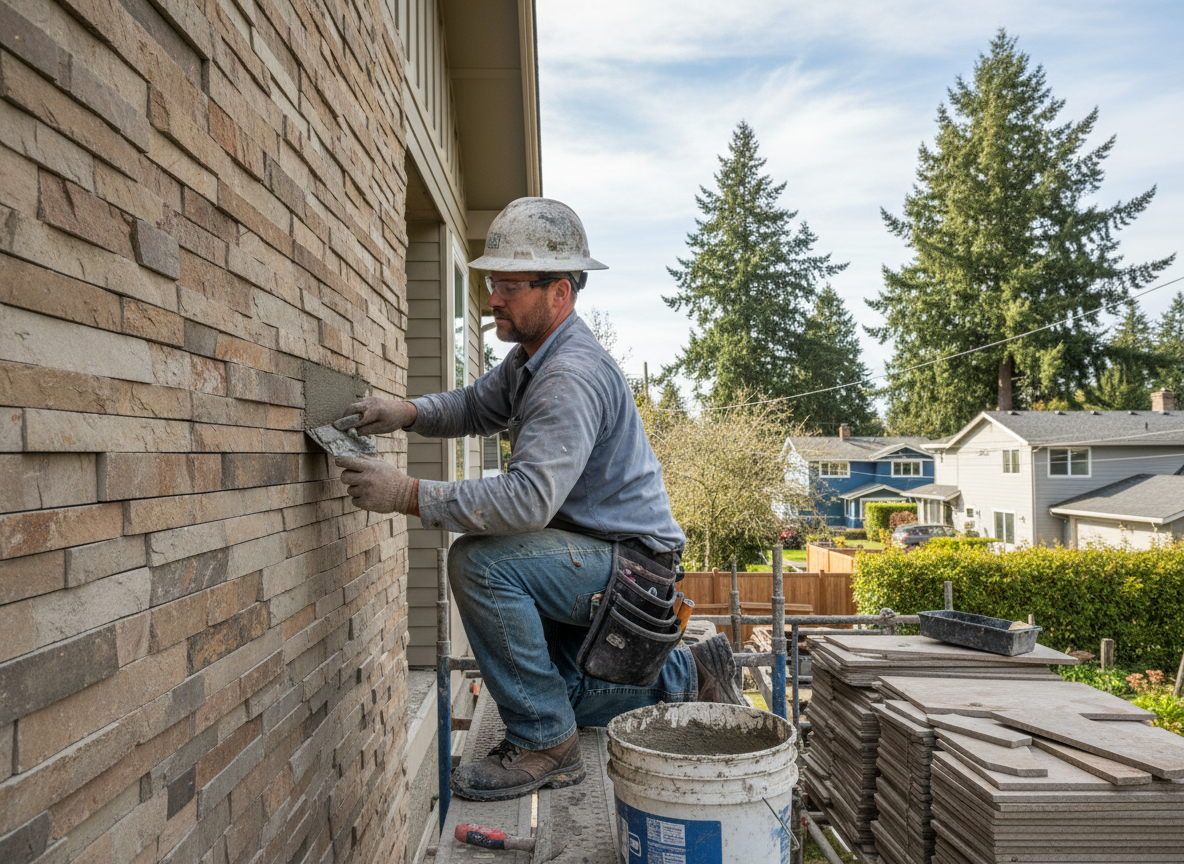
Masonry veneer on Milwaukie homes must handle the shift from mild wet winters to warm dry summers without trapping moisture against the sheathing. In neighborhoods like Ardenwald and Hector Campbell, many houses built before 1960 sit on clay-heavy soils that hold water, so we install weep holes and stainless steel flashing at every horizontal break to let drainage occur. Near the Willamette River in Island Station, vapor drive from the water table pushes moisture inward, requiring a rainscreen gap behind the veneer rather than direct adhesion.
Brick and manufactured stone veneers expand differently with temperature swings common along the river corridor. We use flexible mortar joints sized for Clackamas County freeze-thaw cycles that still occur on clear winter nights. Older foundations in Downtown Milwaukie often settle unevenly toward the river, so we tie new veneer only after checking for movement with a laser level and installing control joints that prevent cracking at corners and window returns.
Portland commuters living in Milwaukie expect veneer that matches the scale of existing brickwork without adding excessive weight to aging joists. We select thin natural stone or lightweight brick units rated for exterior exposure and bed them in polymer-modified mortar that grips better on the occasional summer dust layer. Every job includes inspection of existing weep systems because blocked vents behind older veneer are the most common source of hidden rot we uncover during removal.
Technician insight
In Milwaukie, the thing that catches most people out with masonry veneer contractor is skipping the rainscreen gap on homes near the Willamette River where clay soils and winter rain combine to push moisture inward, especially on 1950s houses in Ardenwald that settled toward the water.
Veneer Repair on Settled Foundation
Home in Hector Campbell showed cracked brick veneer along one wall. We found the foundation had moved toward the river and old flashing had failed. Removed loose units, added new control joints and improved drainage, then relayed matching thin brick. Water no longer collects behind the wall.
How it works
- 1
Site Assessment
We walk the property in Milwaukie to check foundation condition, existing drainage, and exposure to river moisture.
- 2
Material Selection
Homeowner chooses thin brick or stone; we confirm weight limits and color match to local stock.
- 3
Substrate Preparation
Remove failing material, install rainscreen, flashing, and weep holes suited to wet Clackamas winters.
- 4
Veneer Installation
Lay units with proper joint spacing and ties, allowing for expansion in dry summers.
- 5
Final Inspection
Check drainage function and clean mortar before sign-off at 10824 SE Oak St address.
Pricing
Upfront quotes after site visit account for access, substrate condition, and material weight.