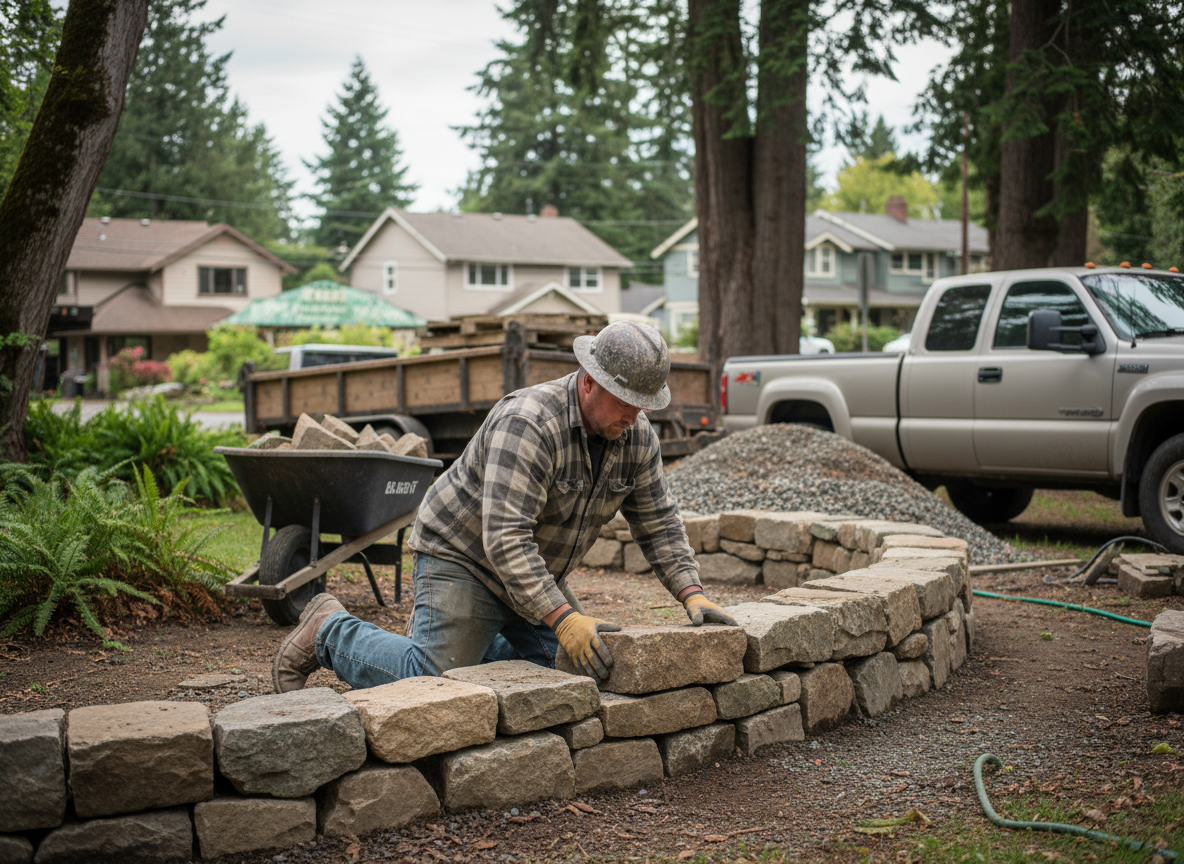
In neighborhoods like Island Station and Ardenwald, many homes sit on older footings near the Willamette River where seasonal saturation shifts soil and pushes against stonework. A stone wall contractor must account for that movement by installing proper gravel backfill and weep holes so water drains instead of freezing and cracking mortar joints during mild but persistent winter rains. Using local basalt or fieldstone helps the wall blend with Milwaukie’s historic character while resisting the freeze-thaw cycles that hit harder along the river corridor than in drier inland spots.
Downtown Milwaukie and Hector Campbell properties often require retaining walls to manage slopes that drain toward the river. We set footings below the frost line even though winters stay mild, then tie the stone into existing concrete or block foundations so the wall does not separate when the ground swells. Mortar mixes are adjusted with higher lime content to stay flexible; rigid Portland-cement blends fail faster when moisture lingers behind the face stones.
Clackamas County permitting treats stone retaining walls over four feet the same as other structures, requiring engineering stamps when they support driveways or patios. We coordinate those inspections and install rebar or geogrid reinforcement where the grade drops sharply toward the river. Homeowners in Portland-adjacent areas frequently discover that skipping drainage turns a simple garden wall into a costly rebuild after one heavy winter.
Technician insight
In Milwaukie the thing that catches most people out with stone wall contractor work is skipping the gravel backfill and weep holes; wet Clackamas County winters push water against the wall face and the first freeze pops the mortar, especially on riverfront lots in Island Station where the soil never fully dries.
Island Station Retaining Wall Repair
A homeowner noticed the stone wall leaning after heavy winter rain. We found saturated soil behind the wall with no drainage. We removed the face stones, installed a perforated pipe and gravel backfill, then rebuilt the wall with proper weep holes. The wall has stayed plumb through the next two wet seasons.
How it works
- 1
Site Evaluation
Walk the property in Downtown Milwaukie or Ardenwald to check soil, slope, and existing drainage before any stone is ordered.
- 2
Material Selection
Choose basalt or fieldstone that matches neighborhood homes and will handle repeated winter moisture without spalling.
- 3
Excavation and Base
Dig below the frost line, add compacted gravel and perforated drain pipe so water moves away from the wall face.
- 4
Wall Construction
Lay stone with flexible mortar, install weep holes every four feet, and tie into any existing foundation for stability.
- 5
Final Grading and Cleanup
Backfill with free-draining material, restore the yard, and leave the site ready for landscaping.
Pricing
Upfront quotes after an on-site visit that accounts for stone type, wall height, and drainage needs.