2026-10-24 ·
What Affects Chimney Masonry Repair Costs Near Milwaukie
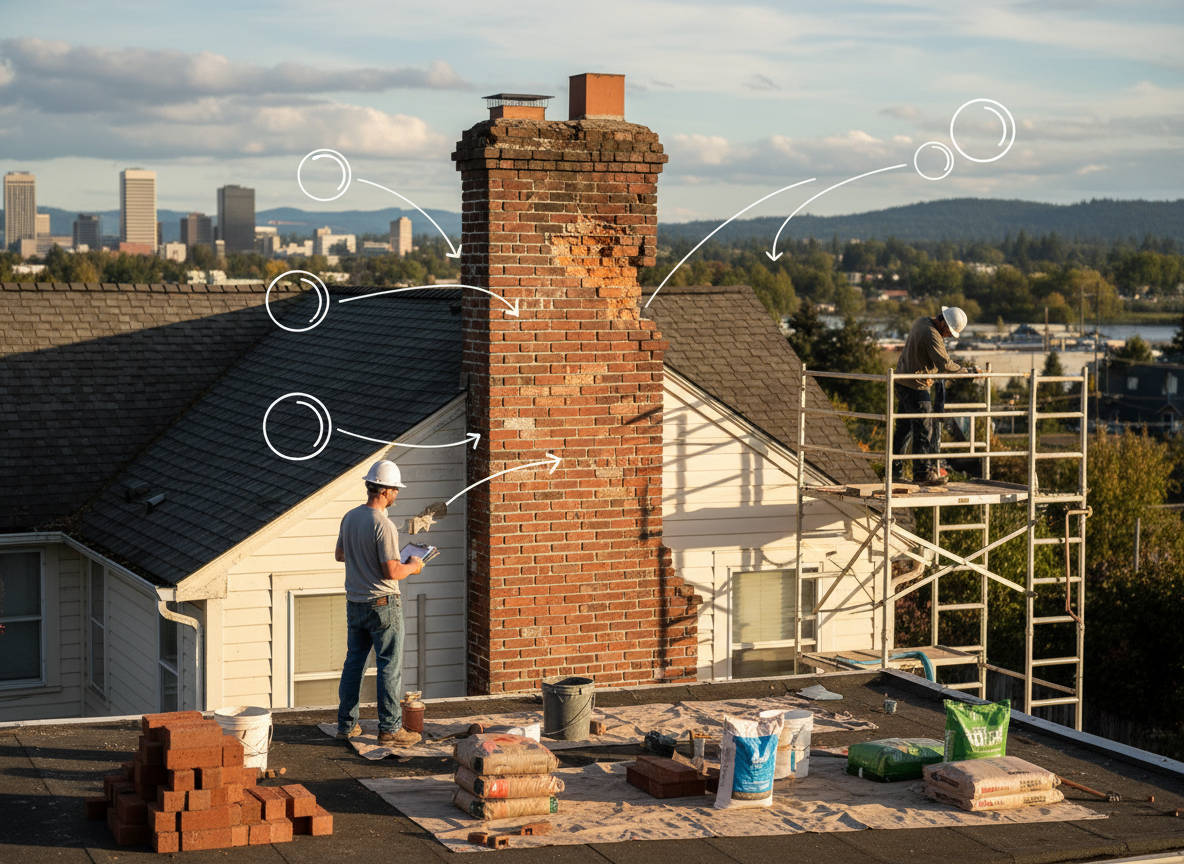
Chimney masonry repair costs near Milwaukie depend on the age of the home, how wet winters have affected mortar and brick, and the extent of damage found during inspection. Homes built before 1970 in neighborhoods such as Ardenwald and Island Station often show accelerated wear because their original chimneys sit exposed to repeated freeze-thaw cycles and constant rain.
Age of the Structure and Typical Housing Stock
Many residences in Downtown Milwaukie and Hector Campbell date to the 1940s through 1960s. These chimneys were built with softer brick and lime-based mortar that breaks down faster when water sits in joints through the long wet season. Once winter temperatures drop and moisture lingers, small cracks widen, allowing water to reach flue liners and framing. Repairs on these older stacks usually require more time for selective brick replacement and repointing than newer homes in the same area. The work also takes longer when the chimney serves a wood-burning fireplace that has seen decades of use. In contrast, post-1980 homes in the same Clackamas County blocks tend to need only targeted tuckpointing because their mortar mixes hold up better against the same rainfall.
Local Climate and Seasonal Moisture Effects
Milwaukie’s mild wet winters followed by warm dry summers create a cycle that directly raises repair scope. Rain falls steadily from October through March, soaking masonry that then dries quickly in summer. This repeated wetting and drying loosens mortar faster than in drier parts of Oregon. When water reaches the flue, it can damage the crown and flashing, turning a simple joint repair into a larger job that includes crown rebuilding. Crews working in Portland’s nearby neighborhoods see the same pattern, but Milwaukie’s proximity to the Willamette River adds extra humidity that keeps masonry damp longer. The result is that jobs scheduled after a heavy winter often involve more brick replacement than the same chimney would need after a dry year.
Material Choices and Repair Scope
The type of brick and mortar originally used changes both the labor and the materials needed. Soft common brick found in many Clackamas County chimneys requires matching units that are no longer stocked at standard suppliers, so each piece must be sourced or cut on site. Lime mortar joints demand hand raking rather than power tools to avoid damaging surrounding brick. When damage reaches the flue tile or crown, the repair expands to include new flashing and sometimes a new cap. These steps add hours because every change must maintain the original appearance on visible elevations facing the street or backyard.
Accessibility and Site Conditions
Chimneys on homes in Island Station and along the riverfront often sit on sloped lots or behind mature landscaping, which increases setup time. Scaffolding must be adjusted for uneven ground, and debris removal takes longer when access runs through narrow side yards. In Ardenwald, mature trees can drop leaves and needles that hold moisture against the stack, so the first step is often clearing vegetation before masonry work begins. These site realities add to the total time compared with flat, open lots in newer subdivisions.
Homeowners looking for more detail on mortar repair in older Clackamas County houses can read Fixing Mortar Joints on Older Homes in Clackamas County. For chimney-specific work, see chimney masonry near me and masonry restoration.